




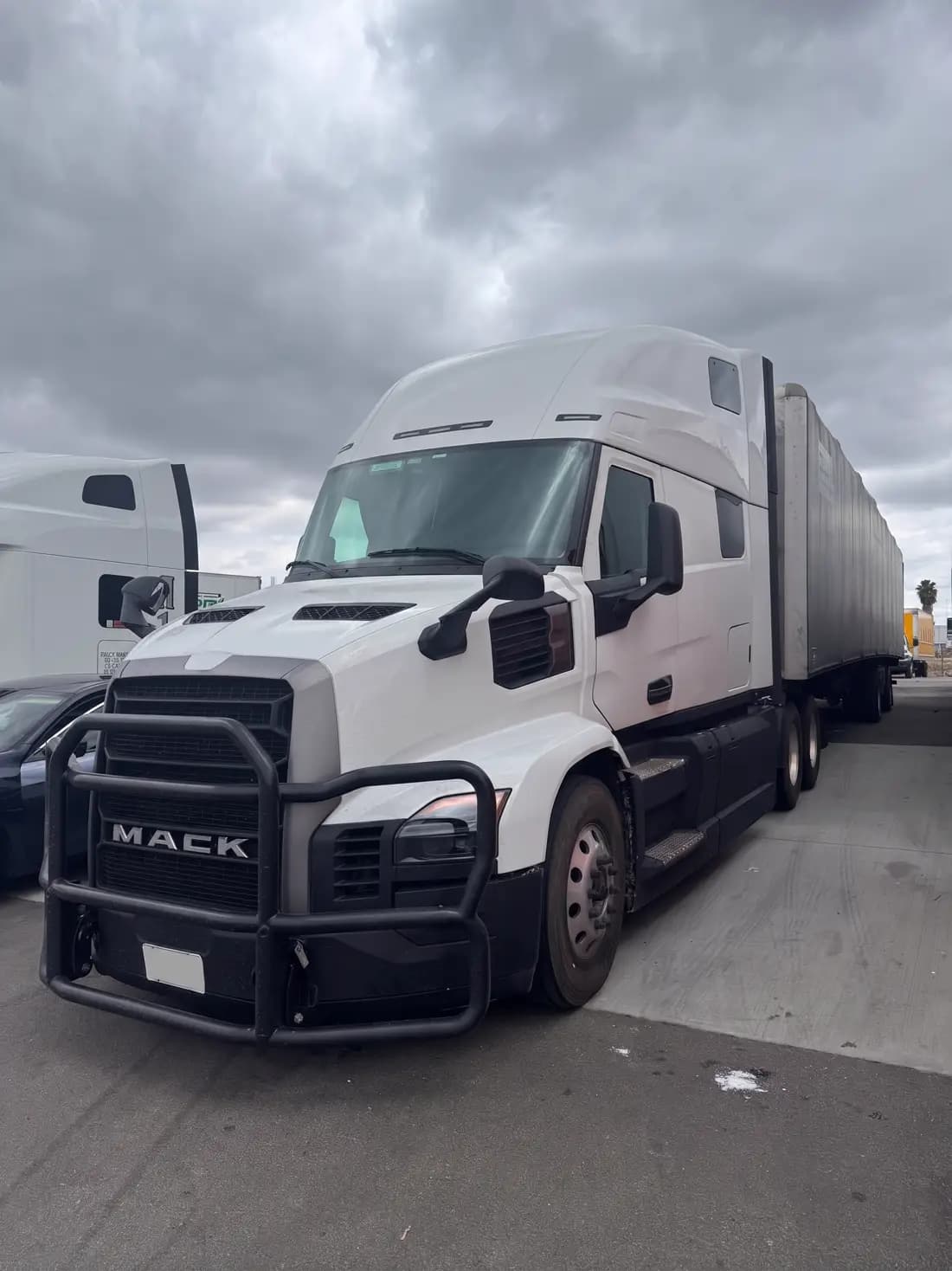
Truck Dispatcher for the US market
Trucks: Dry Van, Reefer, Flatbed, Conestoga, Step Deck, Power Only, RGN, Low Boy. Nine lessons, DAT and Truckstop load boards live on screen, a month of support after the course. Starts October 20. Enrolment closes October 18.
First cohort. Classes are taught in Russian or Romanian. Seats left: classroom 5 · online 5.
- 3
- weeks — from October 20 to November 13
- 9
- two-hour lessons, three a week
- 5+5
- seats left in the first cohort: classroom and online
This is what a load board looks like. The live one is on screen in lesson four.
What a dispatcher does
In the US, freight almost never goes straight from the shipper to the carrier: there is a broker in between. The dispatcher is the person who finds a load for the driver, agrees the price and runs the trip until delivery. It is computer work on US hours.
Finds a load for a specific truck
On the DAT and Truckstop boards — a trip that suits this particular driver: city, date the truck is free, trailer type and rate. Not “whatever is out there”, but for the person.
Deals with the broker
Calls and messages in English: check the broker, discuss terms, push the rate up. It is a conversation with a set order, not improvisation.
Runs the load to delivery
Route, status updates, contact with the driver. Not loaded, not unloaded, stuck on the road — the fix always goes through the broker, and that is a skill of its own.
Keeps the documents in order
Rate confirmation, BOL, invoice, factoring. Every haul and every payment rests on these documents — we go through all of them.
These are two different jobs, not two versions of one
Hauling cars and hauling freight by truck share only the word “dispatcher”. Everything else is different: the boards, the trailers, the markets, and who loses money when something goes wrong. We teach truck freight.
Central Dispatch vs DAT and Truckstop
Car hauling finds loads on Central Dispatch. Trucks use DAT and Truckstop. Different platforms with different logic.
Different trailers, different money
Dry Van, Reefer, Flatbed, Conestoga, Step Deck, RGN, Low Boy, Power Only — each has its own market, its own rates and its own seasons.
Who pays if the broker doesn’t
In trucking that is the factoring company’s problem — the carrier still gets paid. In car hauling it is more often the dispatcher who takes the hit.
Why we chose trucks
A bigger market, simpler freight, and a beginner’s mistake costs less. Starting with car hauling means learning on the most stressful segment.
Three formats. One programme
The content is the same everywhere — the same nine lessons and the same practice. The difference is how you prefer to learn and how much attention you get personally. Every format includes a month of support after the course.
The whole course from any city
- Nine two-hour lessons, live
- Live DAT and Truckstop board in lesson four
- You keep the lesson recordings
- Homework with feedback
- “Top 20 questions” deck and a certificate
- A month of support after the course
Lessons in a classroom, instructor next to you
- The same nine lessons in a classroom in Chișinău
- The board live on a big screen in the room
- A small group: ask your question right away
- You keep the lesson recordings
- “Top 20 questions” deck and a certificate
- A month of support after the course
Your pace and your schedule
- Nine lessons one-to-one, the same programme
- The schedule fits around you
- We work on your mistakes, not the group’s
- Live board and practice at your pace
- “Top 20 questions” deck and a certificate
- A month of support after the course
Three weeks, nine two-hour lessons
Lessons run from October 20 to November 13 · three times a week, two hours each. We set the time to suit the group.
- Lesson 01
Who is who in US trucking
Dispatcher, broker, carrier, shipper, customer, factoring — who pays whom and where the dispatcher’s money comes from.
- Lesson 02
A working day from start to finish
What to do with the first thirty minutes of a shift and how the whole day works — up to handing over to the after-hours team.
- Lesson 03
Trailers and their markets: from Dry Van to Power Only
Dry Van, Vented, Reefer, Flatbed, Conestoga, Step Deck, RGN, Low Boy, Power Only — which freight goes on which trailer and why the markets differ.
- Lesson 04
DAT and Truckstop boards — live on screen
A real board from the instructor’s working account, real loads, no simulations. Students do not get personal logins.
- Lesson 05
Finding a load for a specific driver — practice
City, state, date, a 150-mile radius — and how to tell that a load suits this driver, not just looks good.
- Lesson 06
The broker: the call, the check, the haggling
What to say in the first ten seconds, how to check a broker before taking a load, and how to get a better rate. The core of the course.
- Lesson 07
Paperwork and money: rate con, BOL, factoring
What is in a rate confirmation and a bill of lading, how a document becomes an invoice — and why a broker not paying is not your problem in trucking.
- Lesson 08
Running a load, and what to do when it goes wrong
The driver arrives and they won’t load, arrives and they won’t unload: there is one answer, and it is the broker. Real cases, taken apart.
- Lesson 09
The driver, the team and your first job
How to talk to drivers, what an internship looks like from the inside, how to read a job ad and write a CV.
You leave with a deck answering the twenty questions of your first working week, a certificate — and a month in which you can message a mentor
Why us
The goal is not for you to sit through nine lessons. The goal is for you to understand why this load is taken at this rate, and to know what to do on Monday morning.
Lessons are taught by working dispatchers
Not a recording and not an assistant. People who are running trucks and drivers right now: what they show in a lesson, their drivers haul that same day.
DAT and Truckstop from a working account
Not slides and not a simulator: the board is shown in real time, on real loads. If you want, you can sit down and dig into it during the lesson.
Support is included
In your first month at work you can message a mentor from 15:00 to 00:00: should I take this load, what do I tell the broker. No extra charge and no separate plan.
Templates, not lecture notes
A broker call script, a checklist for vetting brokers, sample rate cons and BOLs, a deck answering twenty first-week questions — all yours to keep.
You are seen
The group is kept small on purpose: across nine live lessons you can ask a question the moment it comes up, not in a chat afterwards.
From the form to your first working day — six steps
There is nothing between these steps that you find out about later: no extra fees, no “advanced module”, no upsell halfway through.
- Step 01
The form
Name and phone — it takes a minute. It commits you to nothing.
- Step 02
The call
We call the same day, between 15:00 and 00:00. Fifteen to twenty minutes: questions about the programme, the format and the schedule.
- Step 03
Your seat and the deposit
Seats left: classroom 5 · online 5. We send payment details personally after the call, never before.
- Step 04
Three weeks of lessons
Three two-hour lessons a week, from October 20 to November 13. We set the time to suit the group. Homework with feedback between lessons.
- Step 05
Certificate and cheat sheet
A deck answering the twenty questions that come up once you are on the job, and a certificate of completion.
- Step 06
Your first month at work
You message a mentor with any question until you find your feet. Included in all three formats.
How the practice works
Lessons are taught by working dispatchers with four years in the job. Each lesson is not a lecture but work in the same window they work in themselves: the board is open, the loads are real, the call is taken apart line by line.
The experience of the people teaching
Four years in the job and several companies — including that first month in car hauling, after which it was clear the truck market works differently.
Being run right now
The course runs alongside real work: drivers are driving, loads are moving. What is shown in a lesson is used the same evening on a real shift.
And Power Only
Experience with every trailer type, not just one. Their markets differ, and they are taught from the inside, not from someone else’s slides.
Negotiation, word for word
What to say in the first ten seconds, how to answer the first “no”, where to push and where to hang up. You keep the script.
The course ends. The support doesn’t
In this job almost everyone who made it to their first pay remembers the same thing: someone sat next to them and helped. The first two weeks decide whether you stay or leave.
Most people don’t have that someone. So for a month after the course you can message a mentor — from three in the afternoon until midnight, the same hours the work happens. Should I take this load or not. What to do if they won’t unload. How to answer a broker who is pushing the rate down.
This is included in all three formats.
Honest answers to your doubts
Almost everyone asks these, and they are the right questions. We answer the same way we would on a call.
What language are the lessons in?
In Russian or Romanian — not in English. English is what you use at work, with brokers on the phone; you need it from day one, but it is not the language of the course.
Will I get a job after the course?
We don’t place people in jobs and we don’t promise that. We teach the profession, help you write a CV, suggest where to send it and prepare you for the interview. After that, it is the market and you.
What if my English isn’t good enough?
Then English comes first. It is the way into the job, not the result of it: we don’t teach the language and can’t make up for it. You need to understand a broker on the phone and get your point across in reply. On the free call we check your level as we talk.
How much does a beginner earn?
We don’t publish a number: it depends too much on the person, the company and the market, and we couldn’t show you a source for it. On the call we name the real range, based on the experience of the people teaching, and explain what it is made of.
Can I combine it with another job?
The course itself — yes: two hours, three times a week, timed with the group. The dispatcher job, at first — no: it is a full day in the US window, 15:00 to 00:00 Chișinău time. That is exactly why the lessons are in the daytime: an honest trial of the schedule before you pay.
Will I get access to a real board?
You won’t get personal logins — DAT and Truckstop access costs money and is provided by the employer. The board is shown in real time from the instructor’s working account, on real loads, and you can dig into it during the lesson. The homework is designed so you don’t need your own access.