
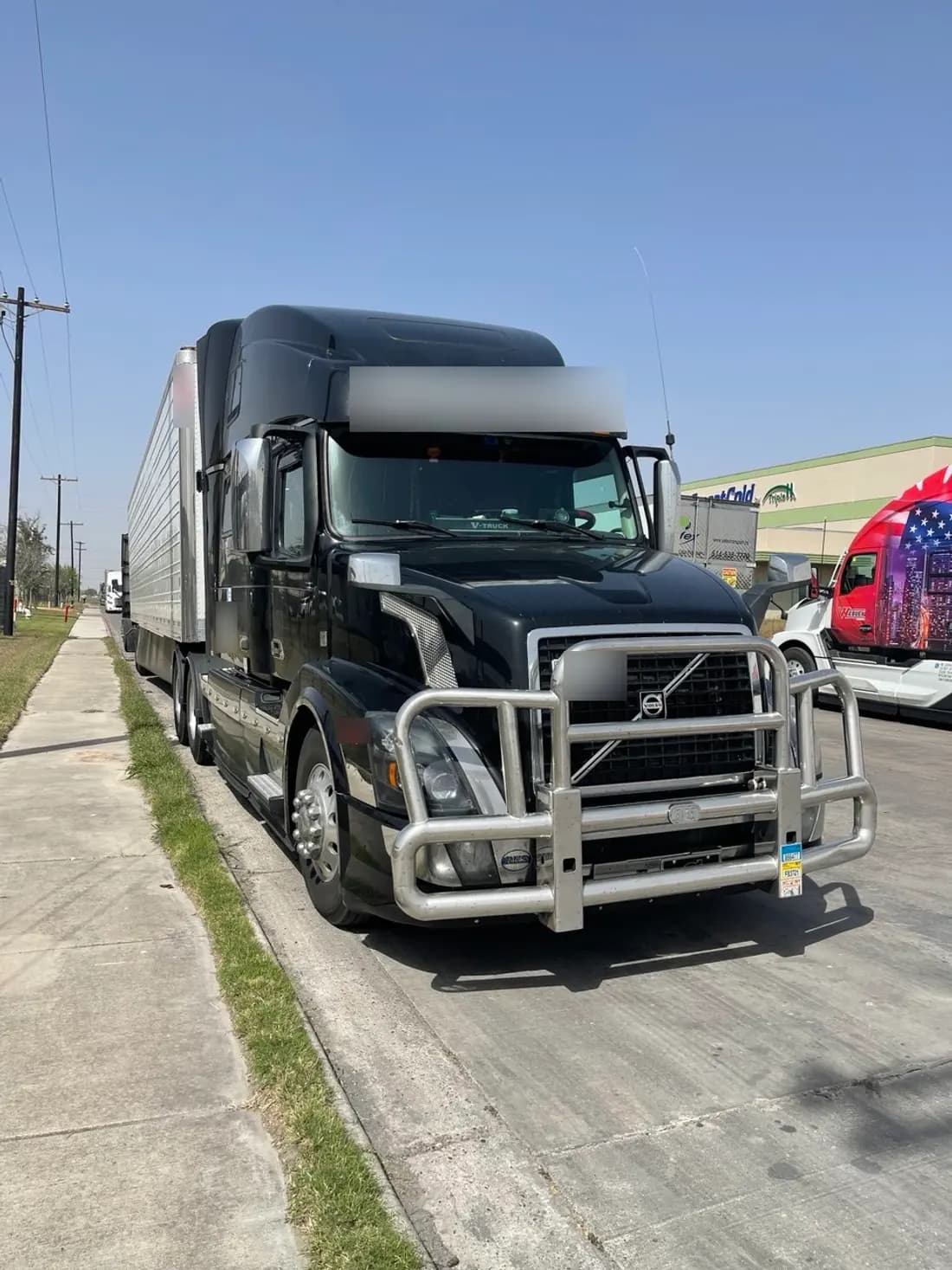
US Truck Dispatcher. What the job is — no sugar-coating
A dispatcher finds loads for drivers, negotiates with brokers and runs each load from A to B. The work follows US hours: the shift starts in the morning in the state where the company is registered, which in Moldova is the 15:00–00:00 window. Here is how it works from the inside: boards, trailers, brokers and money.
How a load is found: seven steps from an empty driver to a trip
This is the first working skill of the job. It all happens on load boards — in real time, for a specific driver.
- Step 01
Open both boards — DAT and Truckstop
At the same time, in any order: some brokers post loads on only one of them.
- Step 02
Enter the city and state where the empty driver is
You don’t search “the market” — you search where the driver is free right now.
- Step 03
Set today’s date
The board shows pickups for the chosen day — you only work with fresh results.
- Step 04
Set the search radius
For example, 150 miles: how far the driver is willing to run empty to the pickup.
- Step 05
Pick a suitable load
Suitable for this driver: not everyone runs 800–900 miles, and everyone has their own equipment.
- Step 06
Call the brokers
Loads are booked by phone: price and terms can only be agreed in a conversation.
- Step 07
Get the truck rolling
Booked the load → sent the details to the broker → sent the details to the driver → the driver is on the way. Then the load is run until delivery.
This is how it sounds from someone who does it every day:
“The driver is empty, it’s morning there, in Chicago, Illinois. You type Chicago, Illinois, set today’s date, set a 150-mile range.”
DAT and Truckstop: why you open both at once
Trucking’s main board
The main source of truck loads: city, state, date, radius, trailer type, rate.
The second board, alongside
Opened together with DAT — the same fields, a different set of brokers.
“If one board is dead…”
“Some brokers don’t post loads on one site, and others do the opposite. If one board is dead for you, something will show up on the other.”
A live screen, a working account
The board is shown in real time, on real loads. Students don’t get their own logins — whoever wants to dig in sits down at it during the lesson.
Different trailers — different freight
Each trailer type has its own freight, its own rates and its own results on the board. “Different freight, different rates, a different market. That’s all.” In lessons four and five each type is covered on screen.
A standard enclosed trailer
Dry goods under a roof: chips, snacks, beer, water. The most common trailer on the market.
Enclosed, with ventilation
The same enclosed box, but with vents: it carries undemanding food that needs air rather than cold.
A fridge on wheels
Frozen goods and temperature-controlled food: it holds the temperature all the way and the documents record it.
A flat open deck
Construction: pipes, cement, slabs. Secured with straps and binders straight onto the deck.
A flatbed under a sliding tarp
The tarp slides on frames and opens the deck from the back, top and sides. Nothing to tarp by hand — and no tarping fee.
Shorter than a flatbed, with a step
A raised section over the fifth wheel at the front, a lower deck behind. Carries the same range as a flatbed, plus loads that are over-height.
With a removable gooseneck
The front detaches and equipment drives onto the deck under its own power: excavators, tractors, combines.
The lowest deck
The lowest on the market — for tall, heavy equipment that is too high for a Step Deck.
A truck without its own trailer
Hauls other people’s trailers and other people’s freight — its own equipment is chains, binders, straps and corner protectors. More on this below.
Why you need to know this up front
The trailer determines the market, the rates and the nature of the work. The course has a whole lesson on it — “Trailers and their markets”.
Power Only: promising, risky and almost nobody does it
A separate niche within trucking. It has its own block in the course — because it works by different rules than the other trailers.
You have the truck — no trailer needed
Buying a truck doesn’t mean buying or renting a trailer: you hook up to other people’s trailers and haul them.
The responsibility is yours
“You pick up someone else’s trailers and someone else’s freight, and if your driver gets stopped for an inspection, the officer doesn’t care whose trailer it is — you’re the carrier, so it’s on you.”
A closed niche
Most carriers have their own trailer — they maintain it, repair it and pass inspections without trouble. So few run Power Only.
Only the securement is yours
Chains, binders, straps, corner protectors. That is the whole kit that makes a truck “Power Only”.
Factoring: why a broker not paying isn’t a disaster
A beginner’s main question: “what if the broker doesn’t pay?”. In trucking there is a mechanism for that, and it is one of the main differences between trucks and car hauling.
Checking the broker — three outcomes
Yes, no, or call the factoring company. Before a load is booked the broker is checked — and only then is the load taken.
Didn’t pay — factoring is responsible
“If a broker doesn’t pay, it’s not the company’s problem or the dispatcher’s, it’s the factoring company’s. We still get our money.”
For comparison: car hauling
In car hauling there is one board — Central Dispatch — and if the broker doesn’t pay, it is most often the dispatcher who takes the hit. A different market, a different risk.
The job’s paperwork — rate confirmation and bill of lading — and the path from pickup to invoice are covered in lesson seven
This is what the course teaches — on real examples and a live board
Three weeks, nine two-hour lessons, in Russian or Romanian. Taught by working dispatchers who are running 7–8 trucks right now. Starts October 20.
- We don’t place people in jobs and don’t name a figure you will earn: we help you into the profession, and after that it is the market and you.
- This page describes the job, not promises. Still have questions? We answer them directly on the free call.